UNDERSTAND THE PROBLEM
Begin with the failure you need to prevent.
A regulated customer journey cannot be automated safely by placing a disclaimer around a general support agent. The system needs an intended use, bounded routes, approved evidence and explicit authority for every action.
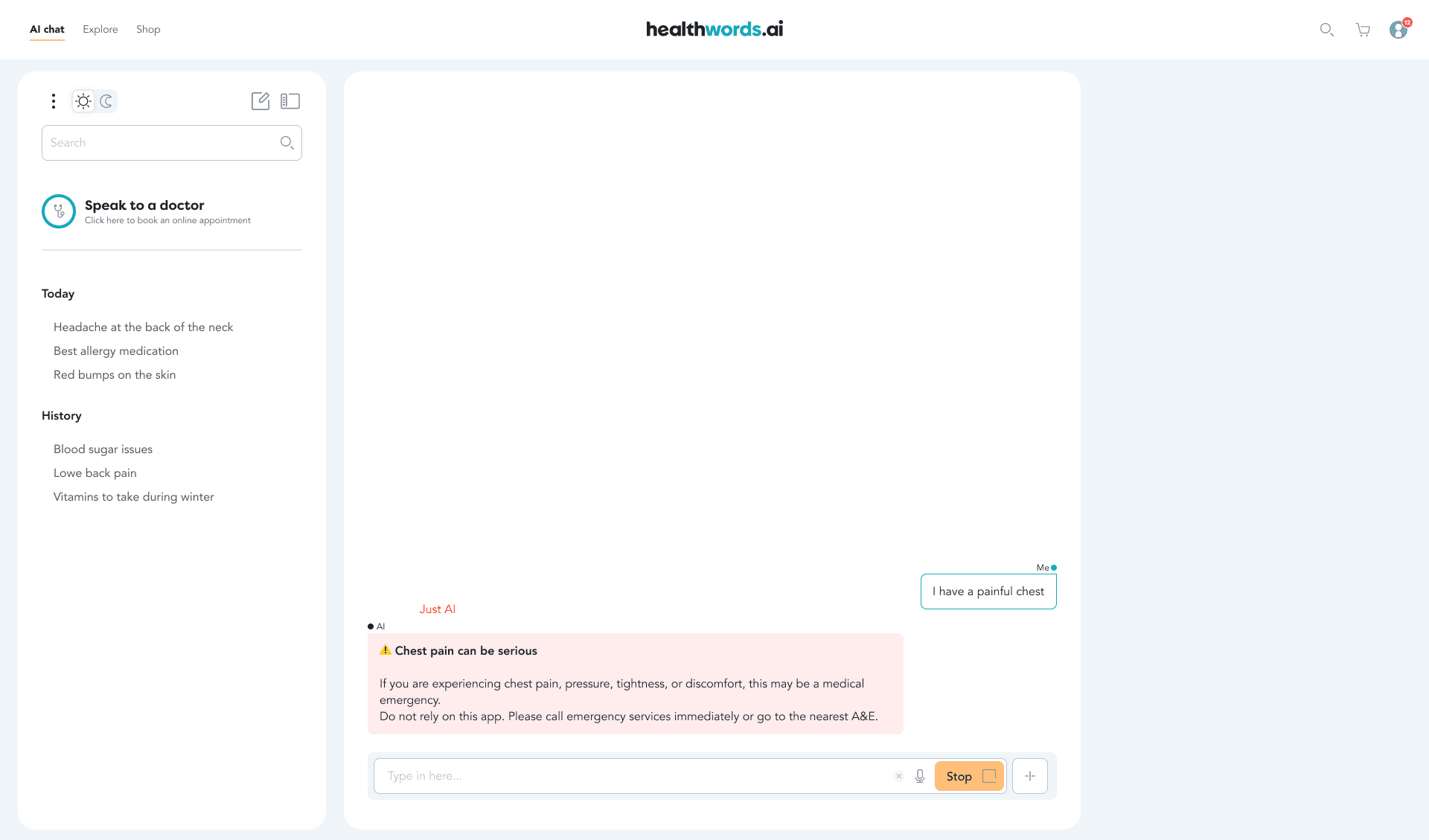
The work begins by separating information, recommendation, transaction and escalation. Each has a different evidence threshold, permission boundary and record.
The same architecture applies across health, financial services, insurance and legal operations: use models for interpretation and communication, while controls outside the model govern consequential actions.
DESIGN THE SYSTEM
Make the operating rules explicit.
A dependable AI system is easier to build when the team can see the decisions, evidence, boundaries and ownership around it. The following principles turn an ambiguous ambition into components that can be implemented and reviewed.
Define what the agent is allowed to decide.
A clear intended use and route map should precede prompts, tools and model selection.
Separate information from action
Retrieving an approved policy and changing an account, transaction or care route require different controls.
Make consent and identity part of the workflow
Collect only the information required for the route and verify the person before exposing or changing protected data.
Design human oversight for a reason
Specify which uncertainty, risk, user request or action causes handover and what the receiving professional needs.
IMPLEMENT IN ORDER
Build the smallest complete loop.
Do not automate every adjacent task at once. Start with one valuable journey, carry it from signal to outcome, and preserve enough evidence to know whether it worked. Expand only after that loop is dependable.
- 01
Write the intended use
Name the user, problem, environment, information used, permitted outcomes and the decisions that remain with a qualified person.
- 02
Create route contracts
For every answer or action, define evidence, authority, prohibited behaviour, fallback and retained record.
- 03
Build policy and knowledge controls
Use approved, versioned sources and deterministic rules where flexibility would create unacceptable risk.
- 04
Constrain tools and identity
Verify the user and expose only actions valid for their role, account, jurisdiction and current route.
- 05
Evaluate hazards and operation
Test missed risk, unnecessary escalation, unsupported action, privacy, handover and the ability to reconstruct each consequential outcome.
KNOW WHEN IT WORKS
Measure behaviour, not how impressive the demo looks.
The useful measure is whether the system creates the intended business or product outcome while staying inside its boundary. Review these checks before launch and whenever the model, data, prompt, tools or workflow changes.
Boundary
The agent cannot invent a route or action outside the product's intended use.
Evidence
Consequential information and actions remain connected to approved sources and current policy.
Escalation
Risk and uncertainty move to the correct human route without losing context.
Audit
The organisation can reconstruct the decision, components, permissions and evidence involved.